Product details description
Cattle are large, powerful animals that require specific fencing solutions.
The "right" fence depends on the cattle's temperament, the terrain, and your
management style (intensive vs. extensive grazing).
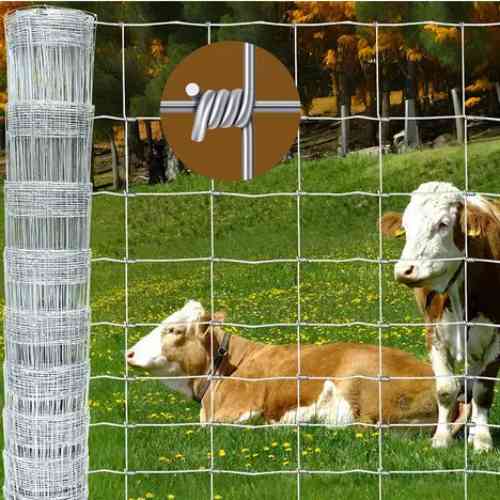
Woven Wire (High-Tensile)
This is the "gold standard" for containment. It consists of vertical and
horizontal wires woven together.
Spacing: For mature cattle, use a "4-5-6" spacing (4 inches between
vertical wires at the bottom, 5 in the middle, 6 at the top). This prevents
hooves from getting stuck and heads from pushing through.
Pros: High visibility, very strong, low maintenance.
Cons: Expensive materials and labor to install.
Electric Fencing
Best for rotational grazing or temporary boundaries.
Polywire/Tape: High visibility (white or yellow) teaches cattle to respect
the fence quickly.
Offset Brackets: Essential for electric fences. You must insulate the wire
from the post. If the animal touches the post and the wire simultaneously, the
shock is shorted out.
Pros: Cheapest option, flexible.
Cons: Requires a reliable energizer (solar or mains) and vegetation
management (weeds grounding the fence).
Barbed Wire
Suitable for perimeter fencing where cattle are not handled frequently.
Single vs. Double Strand: Double strand (one high, one low) prevents cattle
from leaning over the top.
Warning: Do not use barbed wire in lots or near buildings where animals
might panic and run into it.
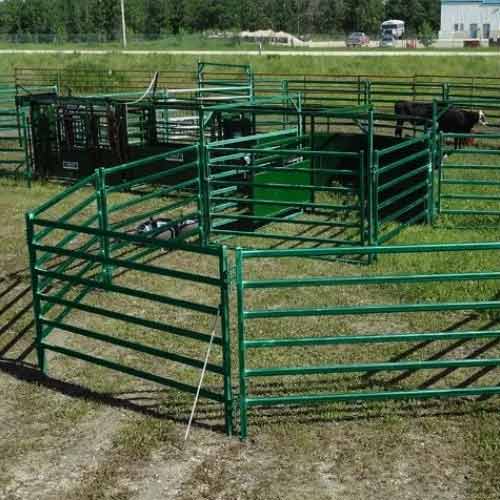
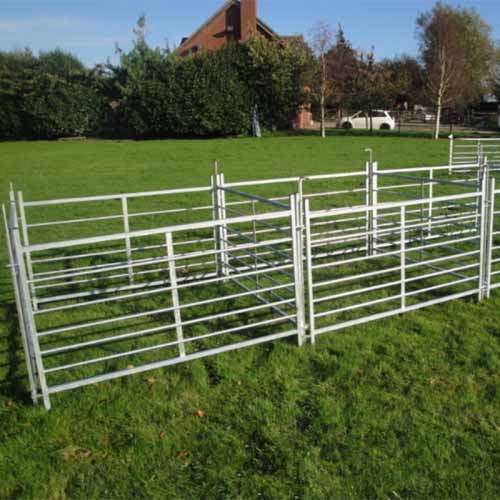
Pipe and Rail (Wood/Steel)
Aesthetically pleasing and very strong, but labor-intensive to build. Best
for perimeter fencing around the farmhouse or show rings.
Previous article:
Cattle Fence for Calving - Safe & Secure Birthing Areas
Next article:
5 Key Features of a Durable Cattle Fence: Strength, Visibility, and Cost Efficiency