Product details description
A durable cattle fence is an investment in safety and herd management,
requiring a balance between containment strength and animal welfare. The first
key feature is the wire gauge and tensile strength. High-tensile wire (12.5
gauge or heavier) is essential because cattle are powerful animals that lean and
push against fences. Unlike standard mild steel, high-tensile wire stretches
under pressure and returns to its original shape rather than breaking or sagging
permanently. This "memory" prevents the fence from becoming loose over time,
reducing the need for constant tightening.
Visibility is the second critical feature. Cattle have a wide field of
vision but poor depth perception; they are more likely to respect a fence they
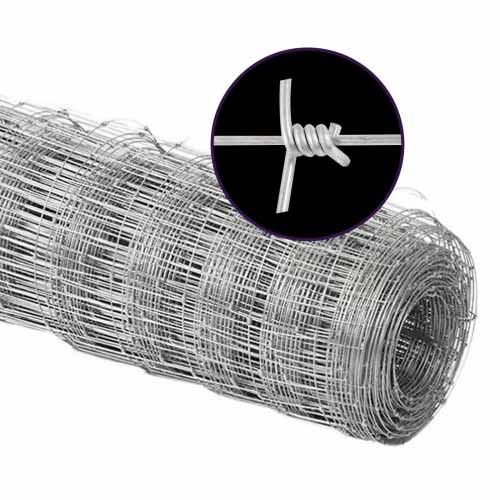
can clearly see. Woven wire fences with small openings (4x4 inches or smaller)
prevent hooves from getting stuck, while high-tensile smooth wire allows for
better visibility than barbed wire. For perimeter fencing, adding a top rail of
white PVC or a brightly colored poly tape increases visibility, preventing
cattle from running through the fence at high speed due to fear or
agitation.
The third feature involves the post system. Wood posts (cedar or locust)
are traditional and cost-effective, but they rot over time. Steel T-posts are
durable but can be bent by a determined animal. The most durable option is a
combination of steel H-posts for corners and end posts, with wood or fiberglass
posts for the line runs. Fiberglass posts are gaining popularity because they
are non-conductive (safe for electric fences), lightweight, and do not splinter
or rot. Proper post depth (at least 24-30 inches for wood, 18-24 inches for
concrete-set steel) is non-negotiable for stability.
Cost efficiency is achieved through longevity and low maintenance. While
woven wire is more expensive upfront than barbed wire, it requires less
maintenance and is safer for the animals (barbed wire can cause injuries that
lead to infection and weight loss). A well-built high-tensile fence can last
20-30 years with minimal upkeep. To maximize cost efficiency, the fence should
be designed with the terrain in mind—using natural contours to reduce the number
of posts needed and installing gates only where absolutely necessary, as gates
are the most expensive and failure-prone part of any fence system.
Finally, the "bracing" system is what keeps a fence straight under tension.
Every corner and end post needs a brace assembly (usually a "H-brace" or
"N-brace") consisting of a horizontal wire and a diagonal brace wire. This
transfers the immense pull of the fence wire to the ground, preventing the end
post from leaning forward. Without proper bracing, even the strongest wire will
pull the posts out of the ground, leading to total system failure. Investing in
proper bracing hardware is the cheapest insurance policy for a durable cattle
fence.
Previous article:
Cattle Fence : How to Choose the Right Type for Your Ranch or Farm
Next article:
Cattle Fence: Integrated Security Systems for Livestock Safety