The Design of Cattle Fence Railing
Release time:2026-02-28 Click:12
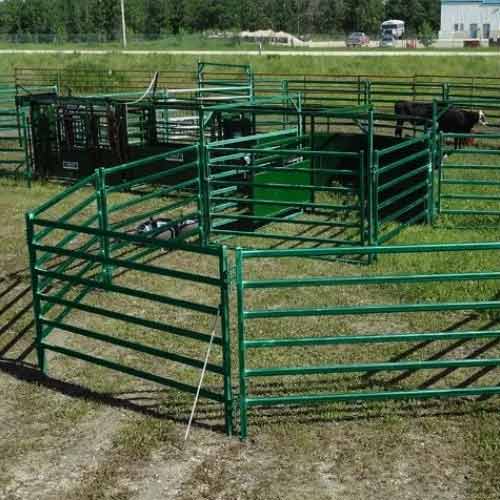
Cattle fence railing is a critical component of livestock management, designed to contain cattle while minimizing injury risks and withstanding herd pressure. Unlike standard fences, its design prioritizes height, spacing, and material strength to deter jumping, leaning, and rubbing. Typically 48–60 inches tall, with horizontal rails spaced 12–18 inches apart, cattle fence railing balances containment with visibility—allowing farmers to monitor herds. Materials range from wood to galvanized steel, each offering unique advantages for pasture and feedlot settings.
The structural design of cattle fence railing focuses on preventing escapes and injuries. Height is paramount: 48 inches deters most cows, while 60 inches is used for aggressive breeds or bulls. Horizontal rails (2–3 per section) are spaced to prevent calves from slipping through (minimum 12 inches) but close enough to discourage climbing (maximum 18 inches). Vertical posts (4–6 inches diameter) are set 8–12 feet apart, with diagonal braces at corners to resist leaning. For added security, electric wires can be strung along the top rail, delivering a mild shock to deter contact.
Materials for cattle fence railing are chosen for durability and cost. Wood (pine, oak, or cedar) is traditional, offering natural aesthetics and repairability—pressure-treated pine resists rot for 20–30 years. However, wood requires periodic staining and is prone to splintering. Galvanized steel railings (1.5–2 mm thick) are stronger, rust-resistant, and low-maintenance, ideal for high-traffic feedlots. PVC-coated steel combines steel’s strength with vinyl’s weather resistance. Composite railings (recycled plastic/wood fibers) mimic wood without rotting, lasting 30+ years.
Applications of cattle fence railing vary by farming scale. Pastures use 48-inch railings with 3 rails, enclosing grazing areas while allowing movement. Feedlots employ 60-inch steel railings with tighter spacing (12 inches) to contain confined herds. Dairy farms use railings around milking parlors, prioritizing hygiene (smooth surfaces prevent manure buildup). Ranch-style railings (with wooden posts and steel rails) blend into landscapes, while portable panels (for rotational grazing) use lightweight aluminum.
Advantages of well-designed cattle fence railing over makeshift barriers are significant. Proper spacing prevents calves from getting stuck, reducing mortality. Smooth surfaces (rounded rails) minimize abrasions compared to barbed wire. Visibility allows farmers to spot sick animals quickly. Durable materials reduce replacement costs—steel railings last 40+ years vs. 10–15 for untreated wood. Electric integration enhances security without harming cattle (low-voltage pulses).
Installation and maintenance of cattle fence railing ensure long-term efficacy. Posts are set 2–3 feet deep in concrete, with rails attached via bolts or brackets. Regular inspections check for loose bolts, rust (steel), or rot (wood). Splintered wood rails are sanded, while rusted steel is wire-brushed and painted. Vegetation near the fence is trimmed to prevent cattle from rubbing against it. For electric railings, batteries or solar chargers are checked monthly. Upgrades like adding electric wires or reinforcing corners extend the fence’s lifespan. Cattle fence railing thus remains a cornerstone of humane, efficient livestock management.
Previous article:Heavy Duty Galvanized Cattle Fence for Ranch Security
Next article:Aperture-Customizable Cattle Fence for Calves & Adult Cattle
Hot products
Mobile: +86 15097722953
Email:metalproducts2021@163.com
Email:1755383270@qq.com