Aperture-Customizable Cattle Fence for Calves & Adult Cattle
Release time:2026-03-01 Click:11
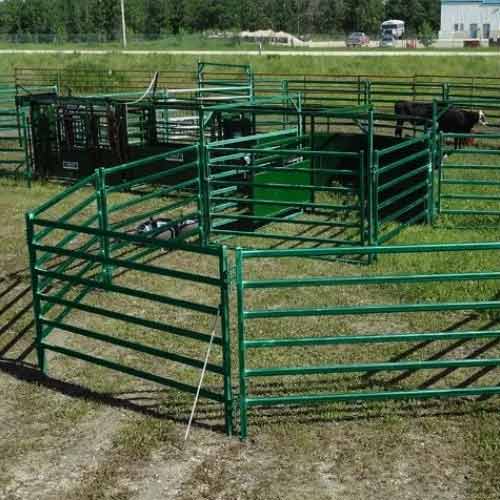
Effective livestock management requires fencing systems that accommodate the distinct physiological characteristics and behavioral patterns of different animal groups within the same operation. Aperture-customizable cattle fence systems represent an innovative approach to this challenge, providing farmers and ranchers with flexible containment solutions that can be adjusted to safely enclose both calves and adult cattle without the need for multiple separate fencing installations. These adaptable systems optimize labor efficiency while ensuring animal safety and reducing escape incidents that can result in economic losses and animal welfare concerns.
The defining characteristic of aperture-customizable cattle fence is the ability to adjust the spacing between horizontal or vertical wires to create opening sizes appropriate for the specific livestock being contained. Young calves require closer wire spacing to prevent escape through gaps that would accommodate their smaller bodies, while adult cattle can be safely contained with wider spacing that reduces material costs and improves visibility through the fence. The adjustment mechanism typically involves sliding brackets, removable crossbars, or modular panel components that can be reconfigured as herd management needs change throughout the year.
Material selection for aperture-customizable cattle fence must balance durability requirements with the flexibility needed for adjustment mechanisms to function properly over extended periods. High-tensile steel wire provides the strength necessary to withstand animal pressure and impact without breaking or permanently deforming. The wire coating, whether galvanization, polymer, or paint, must resist the corrosive effects of animal waste, humidity, and soil contact at ground level. Frame components should utilize corrosion-resistant materials or treatments that maintain structural integrity despite years of exposure to the elements.
The safety considerations inherent in livestock fencing demand careful attention to edge finishing and component design in aperture-customizable systems. All wire ends must be properly terminated with caps, bends, or other treatments that eliminate sharp points capable of causing injury to animals or handlers. Connection points between adjustable components must be designed to prevent accidental disengagement that could create dangerous gaps in the fence line. The fence height must be sufficient to discourage jumping by adult cattle while remaining practical for maintenance and construction within reasonable cost parameters.
Installation practices significantly influence the performance and longevity of aperture-customizable cattle fence systems. Post spacing must account for the wire tension applied to the fence line and the animal pressure that may be concentrated at corners and gate locations. Ground conditions at each post location should be evaluated to determine appropriate post setting depths and concrete encasement requirements. The adjustment mechanisms should be tested during installation to verify smooth operation and secure locking at each spacing configuration before the fence is placed in service.
Management efficiency improvements represent perhaps the most compelling benefit of aperture-customizable cattle fence systems for commercial operations. The ability to reconfigure existing fence sections to accommodate different animal groups eliminates the labor and material costs associated with constructing and maintaining separate facilities for calves, heifers, and mature cattle. Seasonal adjustments for breeding programs, weaning operations, or veterinary treatment protocols can be accomplished quickly without specialized tools or extensive labor commitments. This flexibility supports rotational grazing strategies that optimize pasture utilization while maintaining appropriate animal densities for different age groups.
Economic analysis of aperture-customizable fencing typically reveals favorable lifecycle cost comparisons with traditional fixed-aperture alternatives. While the initial investment in adjustable components exceeds that of standard fence construction, the reduced requirement for multiple fence types and the extended useful life of properly maintained systems typically justifies the premium. Reduced escape incidents and the associated costs of recapturing escaped livestock, repairing damage to neighboring properties, and potential animal health issues provide ongoing economic benefits that compound over the operational life of the fence installation.
Previous article:The Design of Cattle Fence Railing
Next article:The Strategic Design of Perimeter Fence
Hot products
Mobile: +86 15097722953
Email:metalproducts2021@163.com
Email:1755383270@qq.com